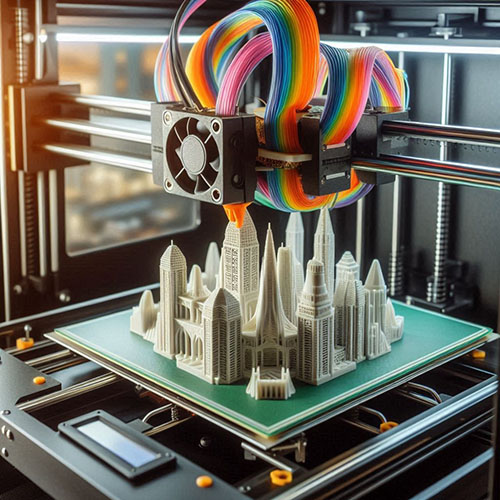
Selective Laser Sintering (SLS) is another additive manufacturing (3D printing) technique, but it’s quite different from stereolithography in terms of materials and process.
How Selective Laser Sintering Works:
1. Powder Bed: A thin layer of thermoplastic powder (like nylon or TPU) is spread over a build platform.
2. Laser Sintering:
- A high-powered laser selectively fuses (sinters) the powder particles together based on the 3D model’s cross-section.
- Only the areas corresponding to the part are sintered; the rest of the powder remains loose.
3. Layer-by-Layer:
- After each layer is fused, the platform lowers slightly, and a new layer of powder is spread on top.
- The process repeats until the full object is printed.
4. Cooling & Cleaning:
- The build cools down inside the powder bed to prevent warping.
- The object is then excavated from the surrounding unsintered powder, which can often be reused.